If you have atopic dermatitis that won't go away no matter what you do, it may be due to electromagnetic waves in your home.
Atopic dermatitis is said to be a disease unique to Japan.
I was in Tokyo from yesterday to this morning.
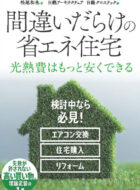
Yesterday we had a meeting regarding the continuation of the Shinken Housing series and the publication of a book.
Many people have been asking me, "Why don't you publish a book?"
It looks like I'm finally going to publish the first book.
Once that is done, he will be a household name in the energy-efficient housing industry.
I visited Professor Minami Yuzo at his home.
In addition, I learned that Dr. Minami had never met Dr. Minami before about electromagnetic waves in homes.
We also invited Mr. Tsuchida from Regina, a world-leading expert on this topic, to join us on site.
I have introduced Mr. Tsuchida several times before,
The site is here,
http://www.regina-life.com/
Please see his publications here.
http://www.amazon.co.jp/%E3%82%A2%E3%83%BC%E3%82%B9%E9%9D%A9%E5%91%BD%E2%80%95%E5%BF%AB%E9%81%A9%E3%81%AB%E6%9A%AE%E3%82%89%E3%81%99%E3%81%9F%E3%82%81%E3%81%AE%E5%AE%B6%E5%BA%AD%E3%81%AE%E9%9B%BB%E6%B0%97%E3%81%AE%E3%81%AF%E3%81%AA%E3%81%97-%E5%9C%9F%E7%94%B0-%E7%9B%B4%E6%A8%B9/dp/4990189981/ref=sr_1_2?ie=UTF8&qid=1405735898&sr=8-2&keywords=%E3%82%AA%E3%83%BC%E3%83%AB%E3%82%A2%E3%83%BC%E3%82%B9
I also have the electromagnetic wave measurement technician qualification established by Mr. Tsuchida and an electromagnetic wave measuring device, so I know everything about electromagnetic waves.
I think I know.
However, I heard something very interesting yesterday.
"Atopic dermatitis is a disease unique to Japan," he said.
(※I checked online today, and it seems that there are cases abroad as well.
There are far fewer cases than in Japan.
So why is this the case? There are a lot of different opinions on the Internet about this.
However, based on Tsuchida's experience with about 200 atopic dermatitis patients,
Apparently, about 70% of people who took measures to protect themselves from electromagnetic waves in their homes were cured.
However, it seems that saying such things carelessly violates the Pharmaceutical Affairs Law, and even saying something like that
However, if that is really the case, it would be a shame to see children suffering from atopic dermatitis.
I thought that parents should definitely know about it, and I'm glad that there are no opportunities to learn about it.
I thought this was extremely unfortunate, so I decided to share it on my blog, even though I am a stranger.
The reason I do this is because my younger brother suffered from atopic dermatitis when he was little.
I know how difficult it is. Fortunately, my brother made a full recovery, but in Japan, it is still common for infants to have
This means that 15 to 30 percent of cases are atopic.
So why is atopic dermatitis so rare overseas yet so prevalent in Japan?
The answer likely lies in the state of electrical wiring in Japan.
In most foreign countries, the voltage is over 200V. In that case, it is dangerous to get an electric shock.
They always have an earth, which is why they have three sockets, unlike Japanese outlets.
If the device is earthed, over 90% of the electromagnetic waves will escape through that earth.
However, since the voltage in Japan is 100V, the idea is that if you get electrocuted at 100V, you won't die.
There is no earthing. This is the main reason why the amount of electromagnetic waves in the home is the highest in the world.
It has become a class.
Moreover, because the house is small, the distance to the electric wires is close, and if you sleep on the second floor, the wiring under the floor
The distances between the two are short, and the amount of electrical appliances is the largest in the world, so all of this is bad.
I think it's working.
In fact, when someone operating a desktop computer touches a small LED light bulb,
The reality of homes in Japan today is that they emit enough electromagnetic waves to make light bulbs glow.
That's not the only drawback of 100V. Electricity is voltage x current, so
If you try to use the same power, the voltage will be lower and the current will be higher. This is also due to electromagnetic waves.
Not only that, but it's also very inefficient.
If you look at the catalog of air conditioners, you will see that air conditioners for 14 tatami mat rooms are 100V and 200V.
Both are available. However, the efficiency of the 100V version is around 6.3, while the 200V version is around 7.
It will be UP. The efficiency will be different by exactly 10%.
Knowing this, Tokyo tried to switch to 200V in Japan, but due to budgetary constraints
It's now blank.
Japan has restarted nuclear power plants, imported large amounts of fuel from overseas, and is trying to save energy.
There is a lot that can be done ahead of us.
・High insulation of windows
・Replacement of existing electric water heater
- Voltage increased to 200V
I think it is.
According to Tsuchida, if the entire country of Japan could be converted to 200V, it would be possible to improve the efficiency of electricity usage by more than 10%.
That's right. The government has just recently announced plans to bury utility poles underground, so I hope that this initiative will also be pursued in tandem.
I would like you to do that. And at the same time, the frequencies are also divided into west and east.
I think we also need to standardize to 50 Hz.
When I asked, "If you were to unify, which one would you unify to?"
Most of the world is at 50Hz, and the amount of electromagnetic waves generated is less at 50Hz, so it will probably be 50Hz.
If that is the case, the capital investments of electric power companies west of Kansai Electric Power will be large.
Professor Minami also told me about the 40-year history of the Japanese housing industry, which was really interesting.
Time passed in no time.
The food prepared by Professor Minami was also amazing. It was a really fun day!!