"Chinese people are ignorant about health" - sometimes even more so than Japanese people.
The weekly show Mirai Seiki Zipangu, which I watch without fail, featured a special on diet trends around the world.
Among them, Tanita, which is famous for its body composition monitors, is planning to expand sales of its body composition monitors in China.
The show featured the places where they were doing this.
I think that even elementary school students in Japan know the term "body fat percentage."
However, even such a word is not used among Chinese people.
It has not yet become widespread... A weight scale has a spring attached to it, and it really measures weight.
It seems to be just that.
"We need to start by teaching people the importance of body fat percentage. We're starting from scratch."
Apparently, a similar approach was once used successfully in the cosmetics industry.
A few decades ago in China, it wasn't even the custom for women to wash their faces (cleansing).
From there, they expanded their education and now it has become an industry worth over several billion yen.
The commentators watching this laughed and said, "This is really just the beginning."
He spoke in a slightly condescending manner.
However, the Japanese are better than the Chinese in every aspect of health.
It may not necessarily be that good.
Japan also has excellent medical care, food, and obesity rates.
There are some shortcomings from an international perspective.
The most prominent of these is the low indoor temperatures in winter.
I've written this so many times that I don't know how many times I've written it, but
Living in a room temperature below 20℃ increases your risk of heart disease and cerebrovascular disease.
Not only serious illnesses that can lead to life or death or have aftereffects, but also atopic dermatitis and asthma
For most other diseases, the lower the room temperature the worse the results.
I know.
This is true not only for Japan, but for all countries around the world where we conducted surveys.
In Europe and the United States, whole-house heating is the norm, and in China and Korea, homes are kept warm as well.
Because there are so many homes in Japan, the low room temperatures in winter are exceptional even when viewed from a global perspective.
The biggest cause of the cold is the windows.
There is a minimum standard for the thermal transmittance of windows in China, and in areas with similar temperatures to Tokyo and Osaka,
The value is below 2.5.
Japan doesn't even have a minimum standard, and the best-selling new home has a dismal 4.65.
The developing countries where these types of windows sell best are
I think it's probably a subtropical or tropical country close to the equator.
Furthermore, when I was looking at today's evening paper, the headline on the front page was "Preventive medicine with big data."
Since 2014, the Ministry of Internal Affairs and Communications and the Ministry of Health, Labor and Welfare have been working on a system to monitor the health checkups and daily exercise of millions of people.
By processing the data together, we can predict the relationship between lifestyle habits and illnesses and provide appropriate health guidance to each individual.
It was written.
This will not be finalized until after 2017, and if any measures are implemented after that, it will be around 2020.
It will be after that. I think it's a good idea to do it, but before you do that,
In the UK, a system called HHSRS has already uncovered 500,000 cases of correlation between room temperature and illness.
This is why buildings in the UK with the lowest insulation rating are issued improvement orders.
Even if it costs a little to install insulation, it is much better than having to continue paying insurance premiums for a stroke or myocardial infarction.
It's a great preventative measure. And it will result in less oil and gas going out of the country, and less energy.
It is also excellent from the perspective of security, and it can also increase domestic employment, which has become difficult to achieve now.
It's truly a five-birds-with-one-stone approach.
Knowing this, similar policies have been implemented not only in the UK but in many European countries.
It is implemented.
Japan should prioritize big data over preventive medicine, rather than the Olympics.
They don't want to do it. It's such a waste, and so irrational that I can't just keep quiet.
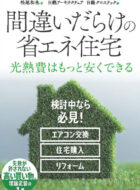
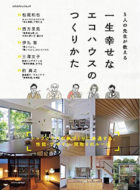
That's why I'm giving lectures and writing books, and last week in the Nikkei newspaper there was an article about the president of YKKAP.
He wrote, "Japanese windows are lagging behind." I feel like this is a great reward.
It was an article. I have no intention of calling it the result of my activities, but it has been repeated over and over for the past two years.
As someone who has been promoting improved window performance, this was a truly welcome article.
The last stronghold in terms of health in Japan is the indoor temperature and humidity environment. If these two can be improved,
Many people suffer from diseases such as heart disease, cerebrovascular disease, atopic dermatitis, asthma, and respiratory diseases.
I think a lot of that will be dramatically improved.
While watching the program, the commentators said, "Unless this area is improved, Japan will be in the same league as China.
I wanted to tell them, ``This is no laughing matter.''