"6 things you need to know about home financial planning" that even financial planners don't know
To ensure that your home, where you live happily, does not become a burden...
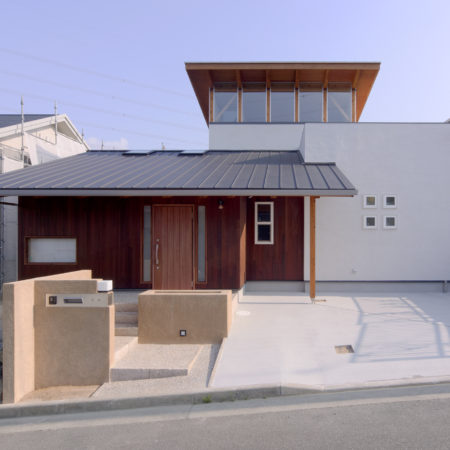
Next, the area that is most overlooked by all housing companies is gaining solar radiation in the winter and blocking solar radiation in the summer.
In my opinion, this is the most important factor, accounting for 5% of warmth and 7% of coolness. As I have said many times, for one 1-ken wide, 2m high (3.3m2) sliding window on the south side, on a sunny day, the heat equivalent to that of one kotatsu (Japanese-style table heater) enters and leaves the room in both summer and winter. In winter, letting this heat in is money, and in summer, blocking it is money.
The higher the annual household income, the more easily it becomes possible to design a home that ignores these points and still make up for them with money (energy). However, the author believes that unless the annual household income exceeds at least 1,000 million yen, none of these six items should be discarded. When reading books on financial planning, car-related expenses, insurance-related expenses, mobile phone-related expenses...these are the only items that come up as items to be reduced. However, I don't think that any media has written about the importance of the six items introduced here until now.
The average family drives about 13 km per year, with a fuel efficiency of 1 km/L. Converted to primary energy, this equates to 27 GJ. In contrast, housing consumes an average of 75 GJ, which is about three times as much. Furthermore, insurance, cars, and cell phones can all be changed in a very short period of time if one wishes to do so. Also, each time a change is made, the cost is sure to fall due to competition and technological innovation. However, once a house is adopted without considering the six factors mentioned above, it is not easy to change. Most people carry the results with them for over 3 years.
Furthermore, for example, if you try to add insulation reinforcement later, it will cost several times more than if you do it at the time of new construction. It is best to do it properly when building a new house. When you think about it like that, you can see that there is no way there is a decent financial plan without cutting down on housing-related expenses. In addition, while in Europe and the United States, it takes three generations to pay a loan to purchase a home, in Japan every generation has to pay a loan for rebuilding.
In order to ensure that a home where you can live happily does not become a burden, both housing professionals and clients must keep these six points in mind.

"Energy consumption intensity per household and energy consumption by use"
Source: Ministry of Economy, Trade and Industry, Agency for Natural Resources and Energy, "Annual Report on Energy for FY25" (Energy White Paper 2014)