Highlights of HEAT20 and comparison with our own property (Says model house) (2)
Highlights of HEAT20 and comparison with our own property (Says model house) (2)
Yesterday I introduced a particularly interesting part of the book.
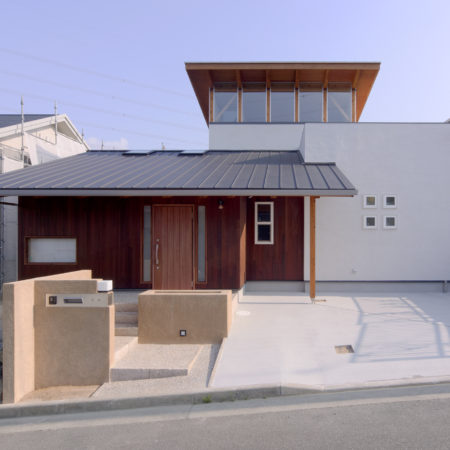
Today, I will continue. About three years ago, I met Says in Katsushika Ward, Tokyo.
Designed a model home.
<Says' Homepage>
http://www.saysinter.com/
<Model house photo>
https://www.facebook.com/media/set/?set=a.627710923954901.1073741836.178046555588009&type=3
This house was measured by a former laboratory at the University of Tokyo, where a large amount of measuring equipment was installed.
We compared the results with the performance of G2 grade homes listed in HEATXNUMX.
*By the way, the Says model only has one underfloor air conditioner for heating, and basically one attic air conditioner for cooling.
When you want to cool the first floor more, you can also use the air conditioner on the first floor.
In addition, on sunny days, the heating is turned off between 7:00 and 17:00 and the temperature is about 20°C or higher.
The heating is on low from 5pm to 11pm, and normal from 11pm to 7am the next morning.
It maintains a temperature of 20°C or higher for 24 hours.
If I recall correctly, the Q factor was around 1.3.
First, let's look at the temperature variations between rooms on page 27.
In a G2 grade home, there is a difference of about XNUMX°C between the hottest and coldest rooms.
This is only a few degrees Celsius with the Says model.
Next, on page 29, we look at how the room temperature drops after the heating is turned off.
In the G2 grade, it can be seen that the room temperature drops at a rate of about XNUMX°C per hour.
With the Says model, the temperature will only drop by about 0.33℃.
In both comparisons, the difference seems to be greater than the difference in Q value.
The following factors may be considered as the cause of this:
(This is just a guess)
・The low variation is largely due to the underfloor air conditioner
・The temperature drop is small due to the concrete under the floor.
There is a high possibility that the heat storage effect is taking place.
- Large amount of solar radiation obtained
・The walls and roof are slightly inferior to the G2 grade, but the performance of the windows exceeds that of the GXNUMX grade.
This is also likely to be effective (there is little variation in insulation performance).
So, I was very satisfied with the results of the comparison.
Also, coincidentally, today is also the birthday of Says' President Oikawa.
Furthermore, about a month ago, President Oikawa had asked me to come up with a plan.
It was a very difficult project that we had been thinking about for a long time, but today it has taken shape.
It's done.
Just when I thought I had completed these two, I found out on Facebook that today was my birthday.
Once again, I realized that President Oikawa is a very lucky man.
Happy Birthday! !