Please support the "Campaign to not use sashes with dehumidifying functions"!!
Please support the "Campaign to not use sashes with dehumidifying functions"!!
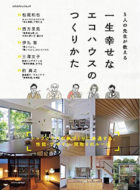
This month's (February 2013) New Architecture Housing +1
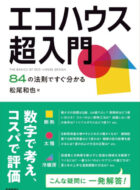
Have you read "Kazuya Matsuo's Eco-House Design Method"?
(5 pages from P78 to P82)
This month's issue is a special feature on windows, with the theme "Starting and ending with windows."
Minimum window insulation standards in countries around the world, including Asia,
And then, by actually entering the product name, you can select the opening and area of each window.
Truly accurate U-value (thermal conductivity) calculated for each piece
Furthermore, the temperature of the lowest point of each window,
Based on that, there is even a table showing the possibility of condensation.
is posted.
Until now, there have been various online information, books, and magazines.
I think this is the first time that this much information has been made public.
This is the result of a huge amount of simulation.
I think it's worth seeing.
I would like to publish only the most important table here.

I think most people would be surprised if they saw it.
When an ideal temperature and humidity environment of 50°C and XNUMX% relative humidity is achieved,
The reality is that most sashes in the country are subject to partial condensation.
I have decided to call this type of sash "sash with dehumidifying function."
I think many people turn on their humidifiers in the winter.
Even though I didn't ask for it, they kindly provided me with this "dehumidifying window frame"
It is working hard to dehumidify the air.
Sashes made by major domestic manufacturers that do not have a dehumidifying function
Whether the frame is made of resin has a much bigger impact than the U-value.
Resin aluminum is suitable for both low-E and non-low-E glass.
It's 100% out.
There was also a problem with false fire certification for sashes.
In fact, although the U-value is said to be 2.33 or less, when you actually calculate it,
Some even exceed that.
The reality is that the minimum standards in China and South Korea are the highest standards for commercially available products in Japan.
Please be aware.
And other unit baths, kitchens, etc. become unnecessary functions year by year.
While significant improvements have been made in both comfort and energy conservation,
The insulation, which is a major factor, has been almost completely eliminated in the last 10 years.
A fact that has not improved.
Meanwhile, countries around the world have established minimum standards for windows and are improving them year by year.
This is a fact.
It is important to know them first, but the next thing you need to do after knowing them is
Use high-performance products. And be aware of your professionalism and do not use low-performance products.
responsibility.
The manufacturers' engineers know that things cannot continue like this.
However, what bothers them is that "there is no demand, so we can't sell it."
The first reason for the lack of demand is that there are no minimum standards in the law.
And in the next energy conservation standard, a U-value of only 4.65 in region IV is the recommended standard.
There's no doubt that this is an outrageous policy.
(In fact, 70% of window sales in Japan remain at this level.)
However, those who know that the standards are ridiculous will not accept them.
This would be a betrayal of both energy conservation and the comfort of the client.
There are many organizations working to build energy-efficient and good quality homes.
Please share and spread the contents of this blog to as many people as possible.
Please help us change Japan's windows through the "No Dehumidifying Sashes Campaign"!